

Story
Anna Šenšelová
1882, Očová – 1976, Martin
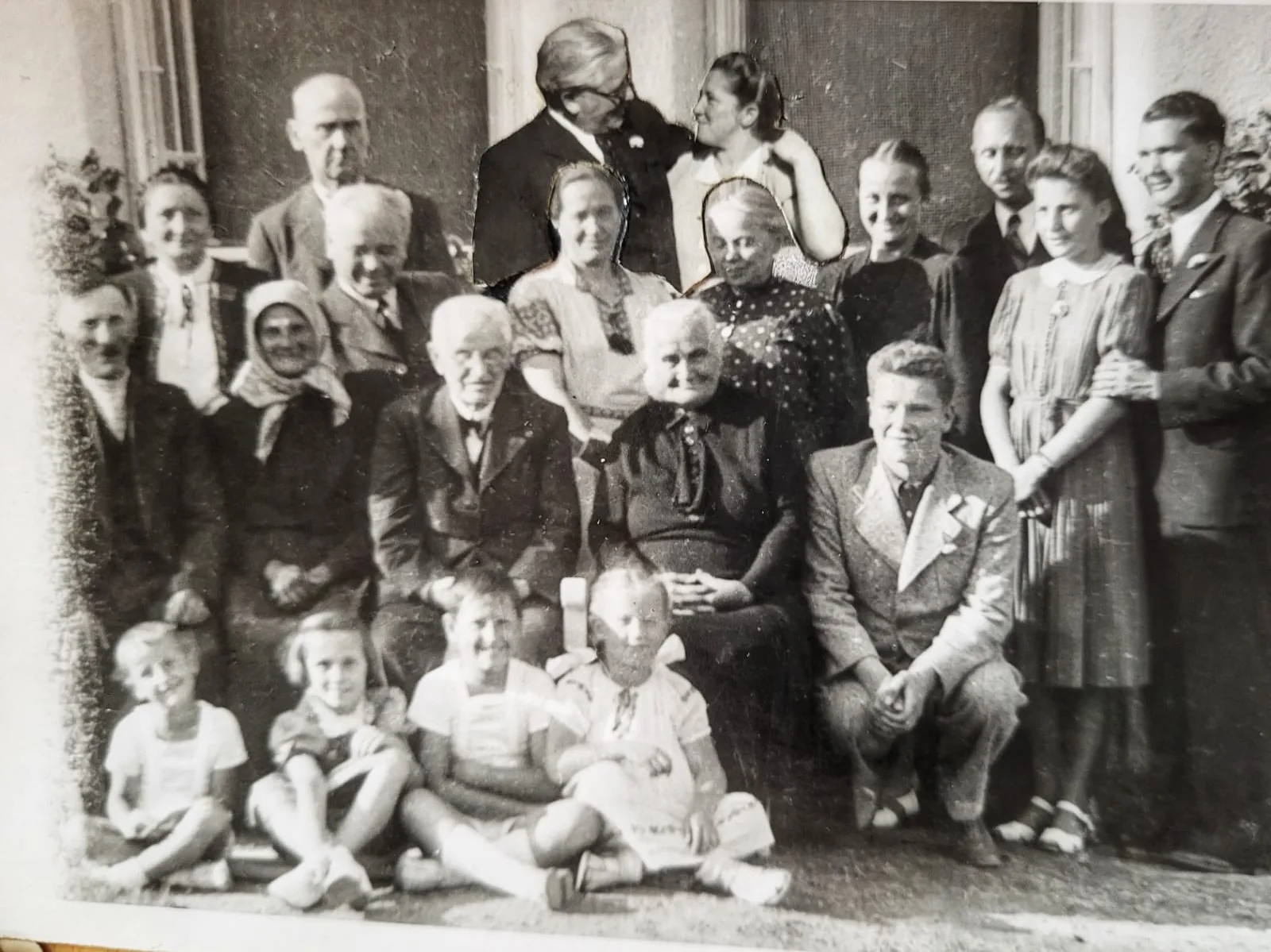
Family photograph
01 / 03
Story
1882, Očová – 1976, Martin
Family photograph
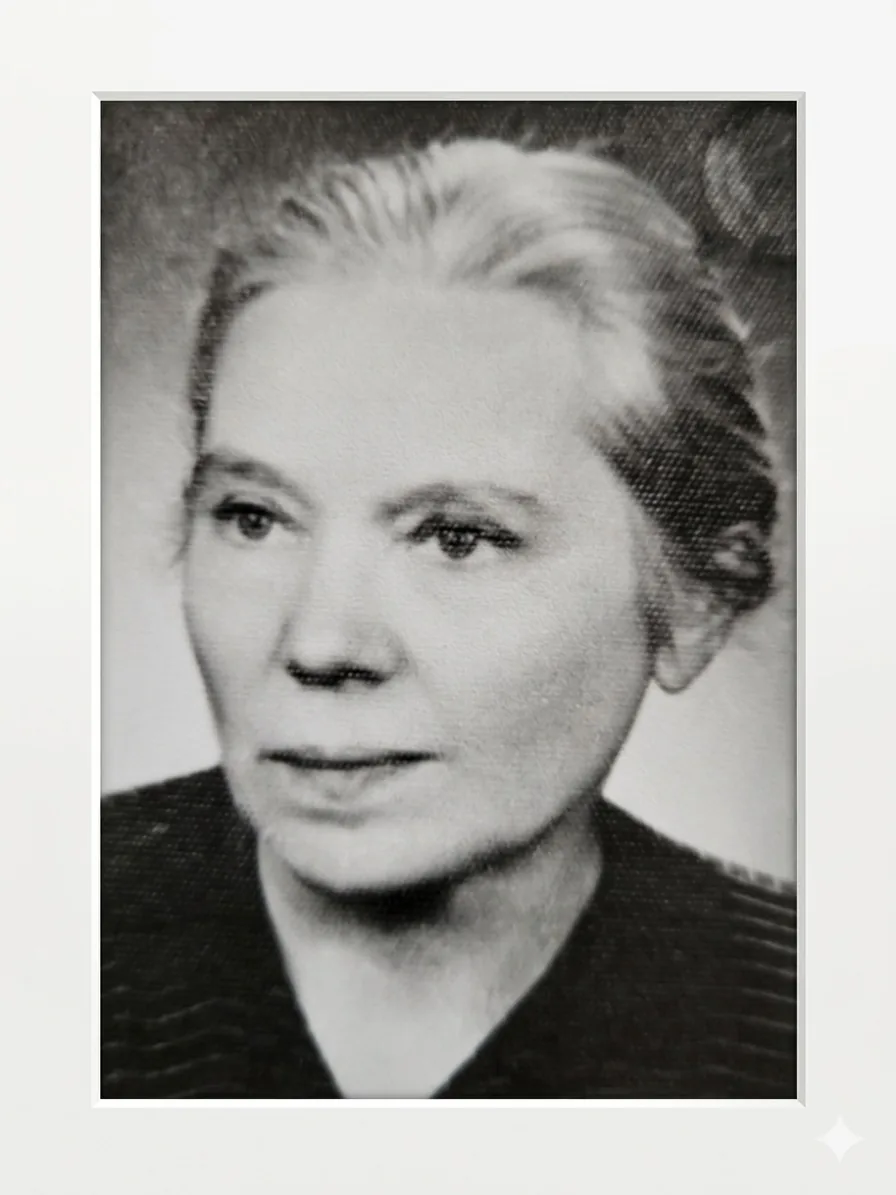
Anna Šenšelová
1882 – 1976
Anna Šenšelová (1882–1976) was an exceptional, deeply modest, and tenacious woman whose life became inseparable from the history of Slovak embroidery. She was born on Christmas Eve in Očová, into a family of Slovak patriots, and from her earliest years she was steeped in a love of Slovak culture.
Although her original dream was botany and the garden, fate carried her to Martin in 1910. It was there that the legendary Lipa, a shareholders' society for folk craft, was being born, and Anna was called to become its driving force.
To understand her work as thoroughly as possible, at the age of 28 she sat at a school desk in Prague, mastering a wide range of embroidery techniques at the Municipal Industrial School. On her return, she gave herself entirely to rescuing the old traditions:
Anna gathered old embroidery samples and kept a watchful eye to ensure that the traditional patterns were not lost. She was careful to see that the women were not swept away by the fashion trends arriving in the new magazines. The sample book of embroideries she had commissioned in Dačov Lom she later sold to the Slovak National Museum in Martin.
Under Anna's leadership, Lipa won awards at international exhibitions from Vienna to Košice. Over the years she served as shop manager, administrator, secretary, and bookkeeper, and she stayed with Lipa until its final dissolution in 1951.
Family memories · Oľga Kapustová
Oľga Kapustová, another of Anna's great-nieces, remembers her as a quiet, modest, and hardworking woman. The children in the family called her "tetinka". She loved pottering about in her garden, and when the raspberries ripened she would send the children out with bowls to eat their fill. Sometimes she pressed money into their hands to go and buy ice cream from the shop, just to give them a little joy. She lived simply and frugally, putting money away for old age. But the currency reform of the 1950s wiped out her savings, and Anna lost the flat she had been living in. Her sister Oľga and her family took her in, and it was there that Anna spent the last years of her life.
The last three years of Anna's life were marked by suffering. After a fall in which she broke her hip, she was confined to bed. Her physical health, and above all her spirit, began to slowly wither. The nights brought restlessness, heavy dreams, moments of confusion. Yet she was never alone; her closest family cared for her with love and devotion until the very end. Anna Šenšelová died on 28 July 1976.
The legacy of my great-aunt, Anna Šenšelová, had almost been swallowed by silence. Two carrier bags of embroideries discovered in my grandparents' cellar sent me searching for her story, and for my own. For it was through these embroideries that I began to unravel my whole family history, and through knowing where I come from that I found a deeper love for myself and a pride in how far back my roots reach.
source: Proceedings of the Slovak National Museum. Ethnography, Jan V. Ormis, 1982 · family archive: Ján Juráš, Oľga Kapustová
Family line
Anna came from a long line of Evangelical Slovak patriots. Hover over a name to learn more.
Great-grandparents


Parents


Anna Šenšelová and her siblings


Embroidery in the blood
When I began researching the history of Lipa and Anna Šenšelová, I never expected to find a love of embroidery woven through so many of my ancestors. The Šenšel family had a bond with needle and thread that I could not have imagined.
It was 1918, and Slovakia stood on the threshold of an enormous change. A group of young women from Mikuláš decided to greet this liberation in a way that was not only deeply symbolic but also dangerous: by embroidering a flag of freedom. They worked behind locked doors with the curtains drawn, and when anyone came asking what they were doing, they would answer that they were "embroidering altar cloth".
They were funded by Branko Lacko, who procured genuine Czech white silk. The design of the flag was drawn by the academic painter Kostelníček; gold and silver threads were supplied by the Lipa association from Turčiansky Sv. Martin, the very same association where Anna Šenšelová would work for so many years. The motifs from Bohemia, Slovakia, Moravia, and Silesia were embroidered by Miss Uličná; each corner of the flag had its own embroiderer. Four women on the corners, others working on the patterns, the preparation, and the tracing: nine courageous women in all, one shared act.
Before they set to work, each embroiderer cut a lock of her own hair and stitched it into the pattern of the flag. They sewed a piece of themselves, literally, into the fabric, into history.

Embroiderers of the Flag of Freedom.
Darina Trnovská (later Šenšelová) second from left, top row
Flag of Freedom

Ceremonial gathering
8 December 1918, Liptovský Sv. Mikuláš
Among those four courageous women was my own great-grandmother, Darina Trnovská, later Šenšelová, Anna Šenšelová's sister-in-law.
The flag was presented to the public on 8 December 1918 at a gathering of 15,000 people in Liptovský Sv. Mikuláš. It was consecrated together by Andrej Hlinka and Jur Janoška. Soldiers took their oath beneath it. A special poem was written for that day and read aloud by Lujza Lacková.
In 1968, on the fiftieth anniversary of the Martin Declaration, the flag came home to Liptovský Mikuláš. At a ceremonial evening called "Hoj, zem drahá!" ("Oh, dear land!"), it was presented to the public once more by three of the embroiderers: Darina Droppová-Hubková, Oľga Schatzová-Belnayová, and Darina, by then Darina Šenšelová-Trnovská.
Among the other women of the Šenšel family whose lives were intertwined with embroidery was Anna's mother, Ľudmila Šenšelová Izáková, the quiet bridge between Anna and the embroiderers of Slatina, a gentle, unassuming link without which Lipa might never have found its way to the right women. Also working in the Lipa shop in Martin was Anna's niece, Viera Helvíghová, who died, sadly, very young. Her older sister, Darina Helvíghová, took in Viera's two daughters and later, in Martin, cared for Anna Šenšelová herself in her final years.
The story of the flag was set down by Jozef Juráš, an Evangelical pastor and political prisoner, and the father of Ján Juráš, Anna Šenšelová's godson. This text comes from the personal archive of the Juráš family and is one of the very few first-hand accounts of how the Flag of Freedom came into being.
Read the original text by Jozef Juráš (PDF)Listen
One of the first things that drew me deeper into the story of my namesake was this podcast. Monika Kapráliková brought to it both sensitivity and genuine curiosity. It was through listening to her that I understood I simply had to know Anna Šenšelová for myself.
Rádio_FM · Robinsonky_FM
Anna Šenšelová
A podcast from the Robinsonky_FM series, and one of the first things that set this whole search in motion. Monika Kapráliková tells Anna's story with great care and feeling. Well worth hearing it in her voice too.
Listen on Rádio_FM